Overview
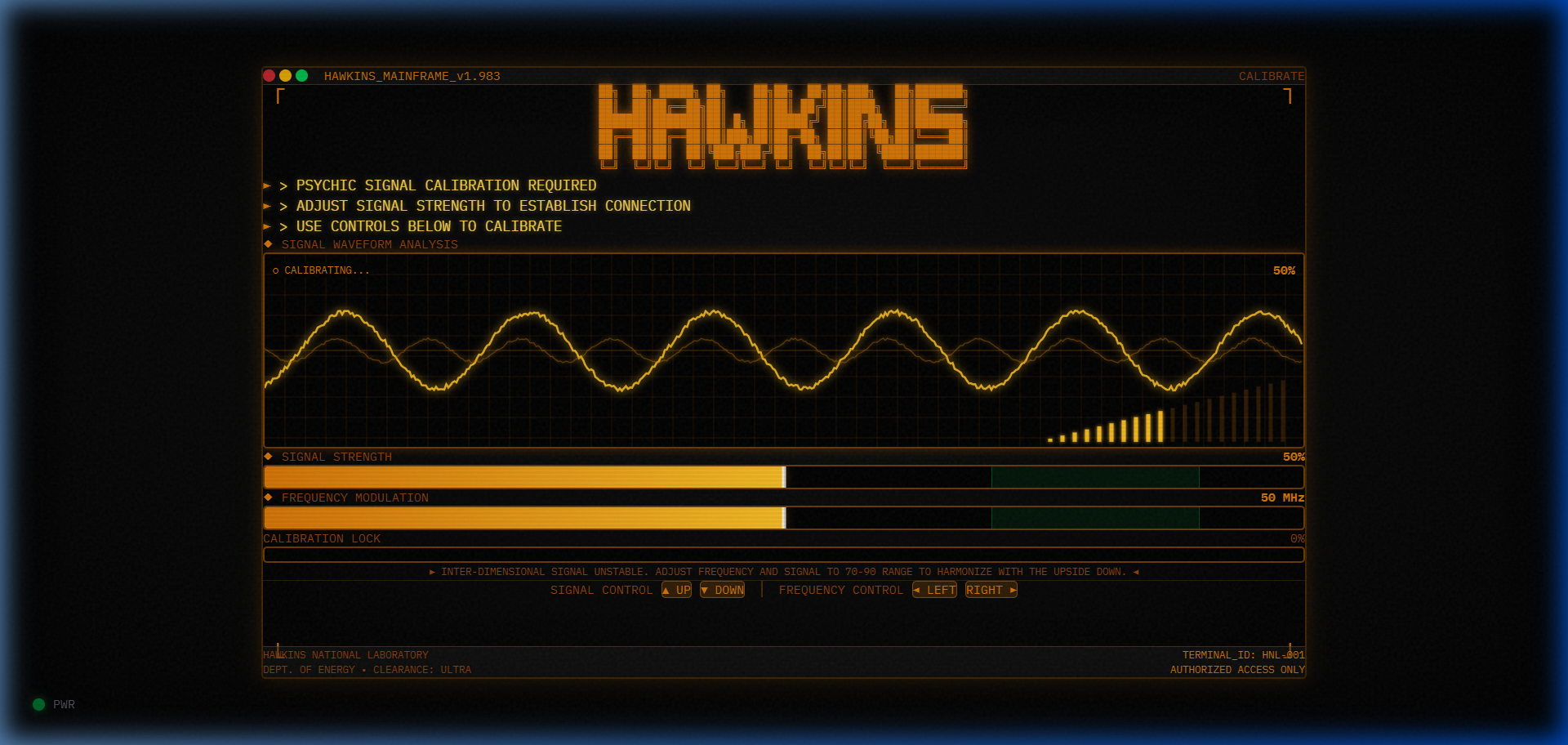
The goal was to build a technically impressive creative project that demonstrates full-stack web capabilities, UI/UX depth, and audio engineering while telling an immersive story. Directly inspired by the Stranger Things series (originally titled Montauk), the Hawkins Incident Command Console is a fictional 1980s containment system simulation.
System Architecture
The project is structured as a Next.js 14 application with three primary functional modules:
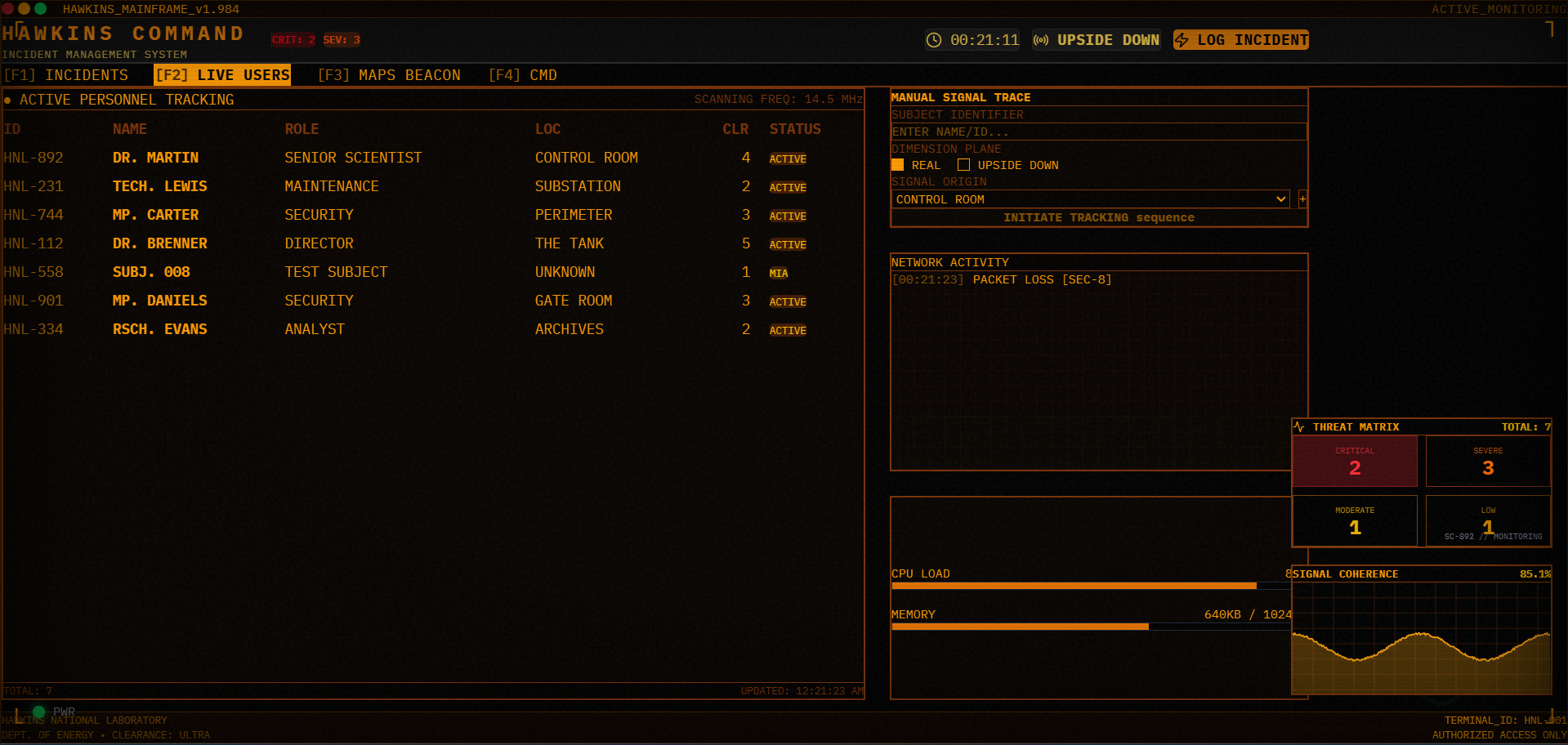
- Reality Monitor: A dual-mode interface allowing users to breach the Upside Down. It features advanced CRT emulation, chromatic aberration, and organic particle decay to simulate the atmospheric "ash" of the alternate dimension.
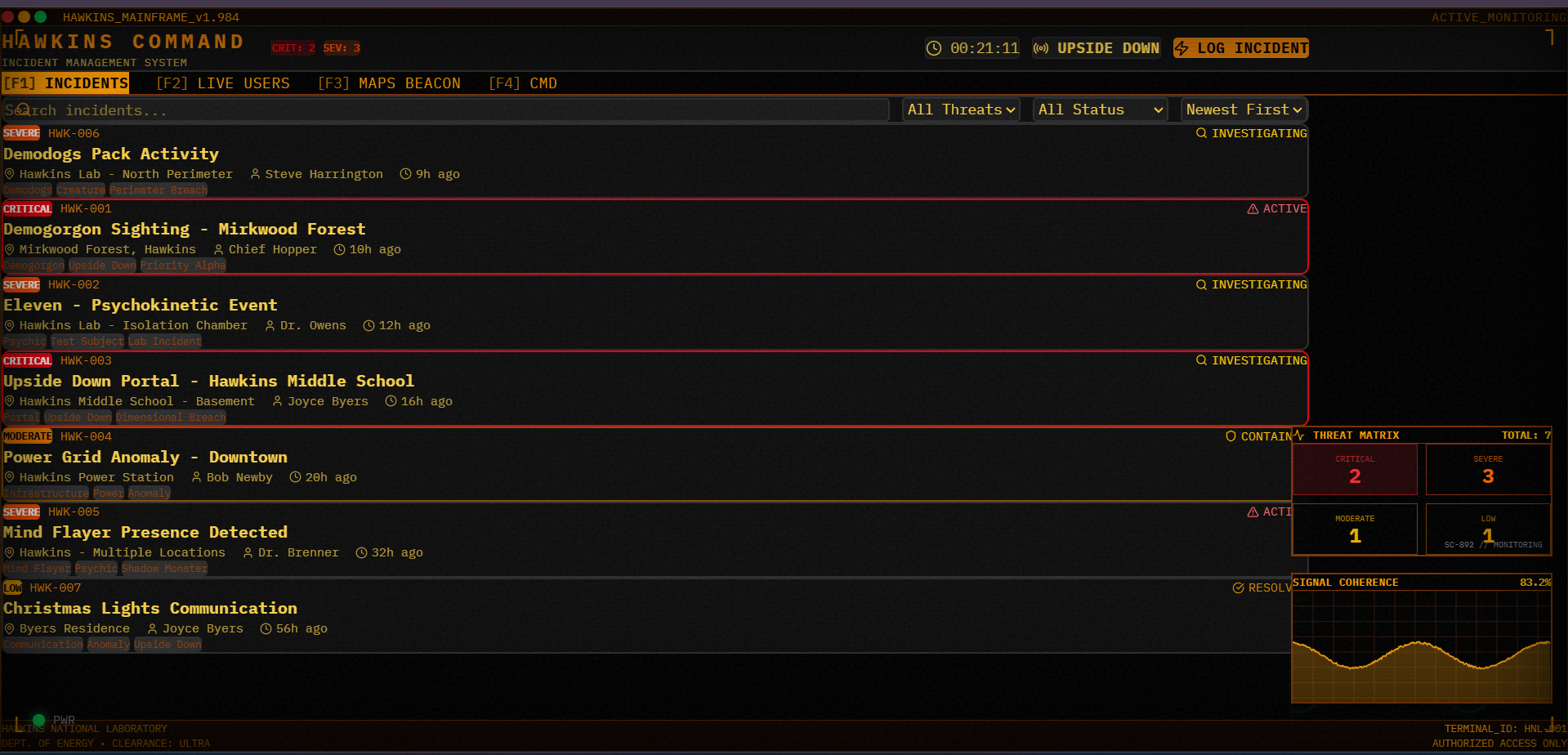
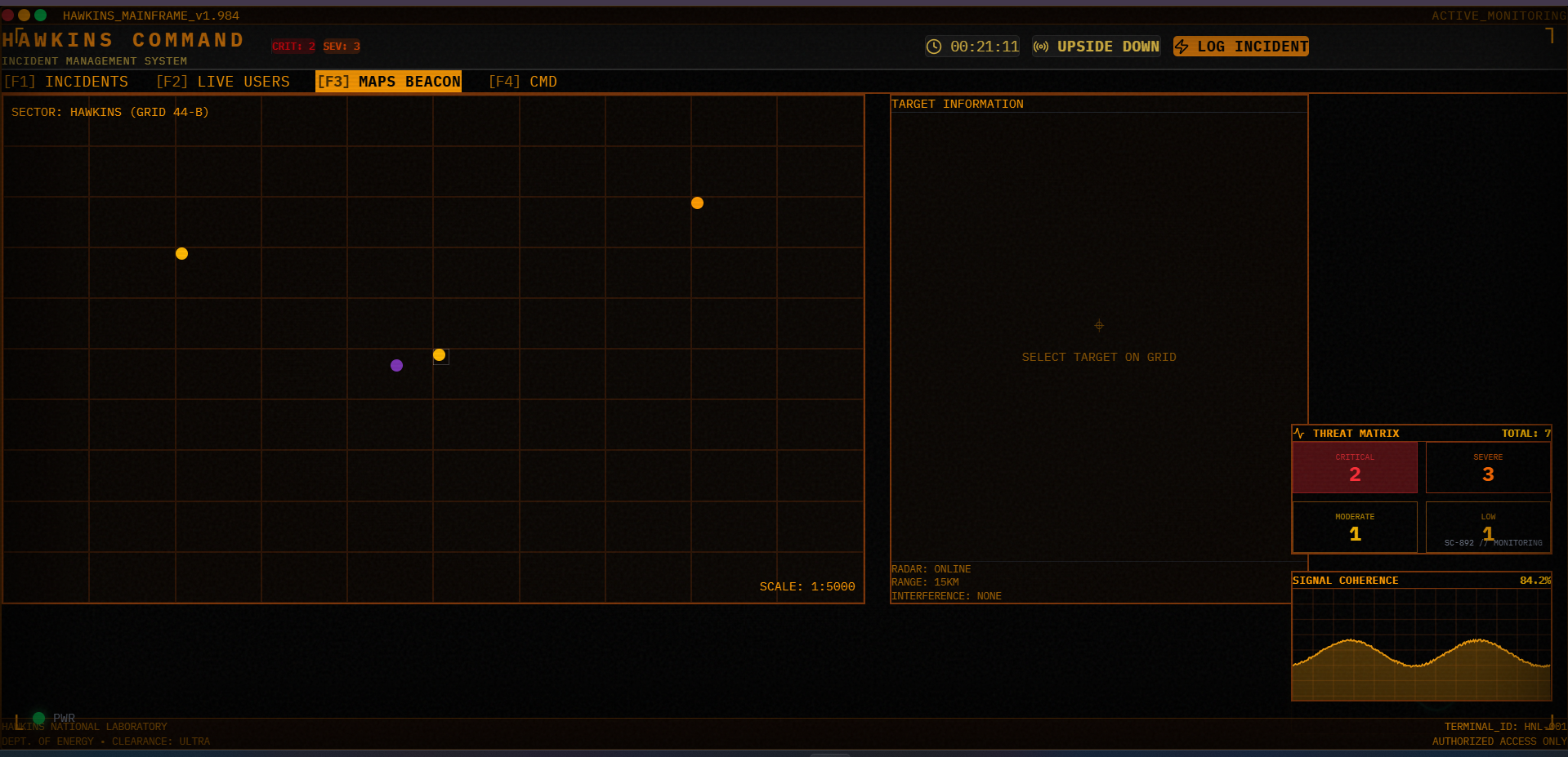
- Dimensional Tracker: A live feed of threats categorized by their proximity to the Hawking's gate, tracking the movement of entities like the Demogorgon and the Mind Flayer.
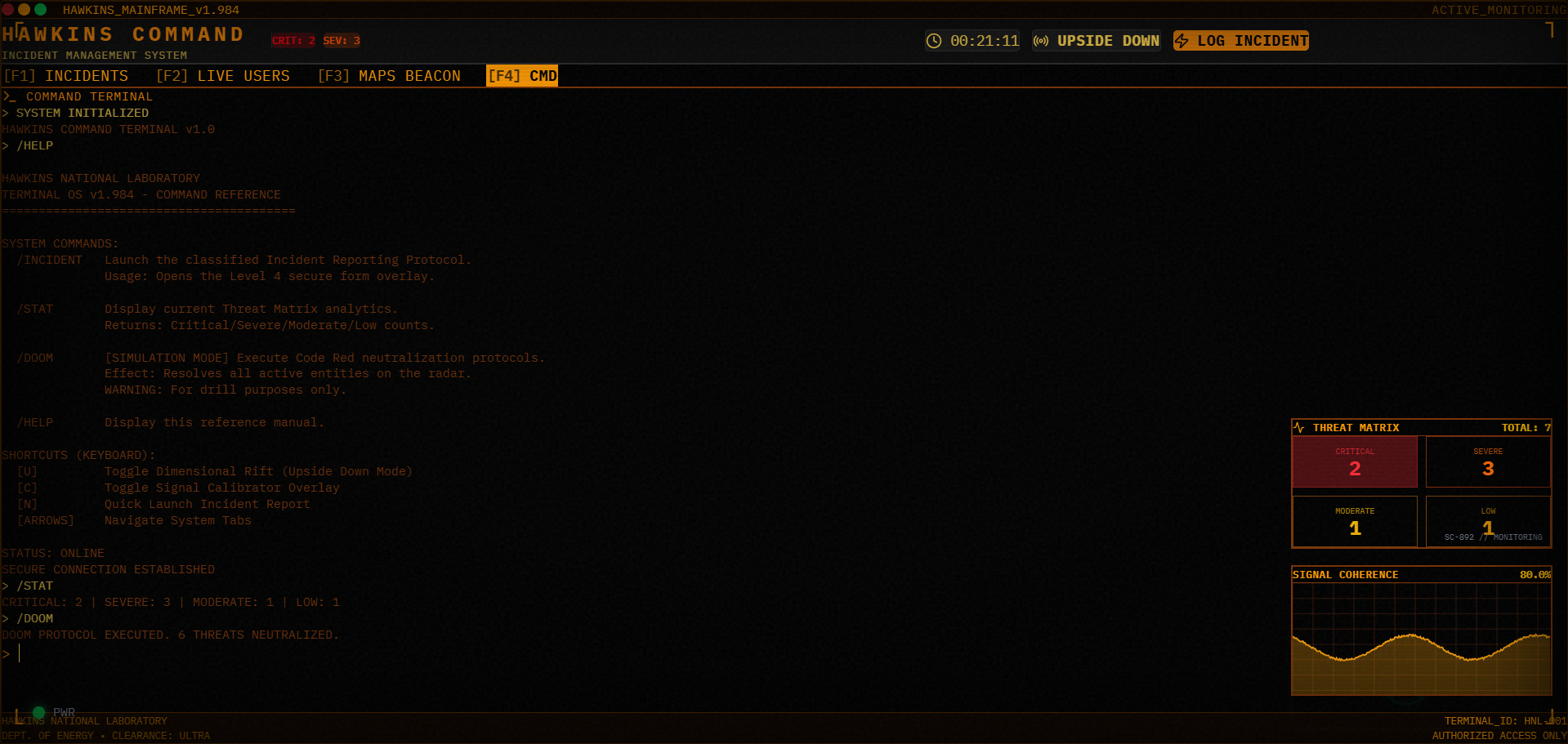
- CMD Terminal: A retro-style OS terminal with deep-level commands (e.g.,
SCAN,BREACH,INIT_OS) used to stabilize the rift.
Implementation
The system's core innovation is the Reality-Shift Toggle, which triggers a seamless transformation of the entire UI into the Upside Down. This transition utilizes layered CSS filters and state-driven transitions to orchestrate a "glitch" effect, shifting the palette to decaying blues and greys while spawning interactive particle anomalies. A high-fidelity soundscape, synthesized via the Web Audio API, provides an unsettling organic background that replaces the technical hum of the standard mode. Signal calibration sliders allow users to interactively "tune" into dimensional frequencies, visualized through real-time SVG waveforms.
Outcome
The result is a fully deployable, immersive creative web experience that serves as a technical and aesthetic homage to the Stranger Things universe. It demonstrates complex state management, 60fps performance-optimized animations, and browser-native audio synthesis without any external libraries.
Lessons Learned
- Web Audio API: Powerful real-time synthesis possibilities are available directly in the browser, eliminating the need for heavy external audio dependencies.
- CRT Aesthetics: High-fidelity retro effects can be achieved cleanly with a small set of layered CSS filters and animation utilities.
- Timing Orchestration: Coordinating CSS transitions with React state is highly effective for precisely timed complex UI sequences like a system boot sequence.